See also: wholesale wood pellets for France, wholesale wood pellets for United Kingdom, wholesale wood pellets for Spain, wholesale wood pellets for Italy, wholesale wood pellets for Denmark.
Wood pellets have become one of the most actively traded wholesale heating fuels in Europe, moving from Portuguese and other Southern European sawmills into pellet stoves, central-heating boilers, commercial biomass plants and district-heating networks from Lisbon to Helsinki. For distributors, installers and biomass fuel buyers evaluating suppliers, understanding what "ENplus A1" actually guarantees — and how wholesale sourcing, logistics and pricing work in practice — is the difference between a reliable supply contract and a costly quality dispute six months in. This guide covers the specification, the supply chain, and what to expect in five of the largest European wholesale markets: France, the United Kingdom, Spain, Italy and Denmark.
What Makes a Wood Pellet “ENplus A1”?
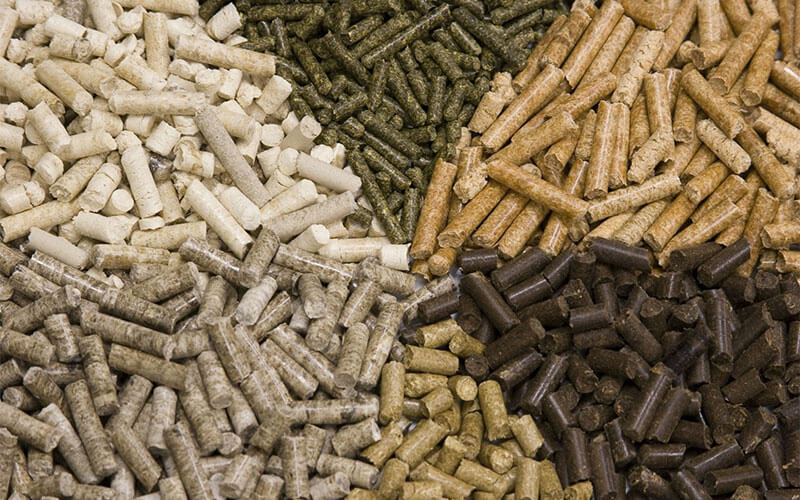
ENplus is the European wood pellet certification scheme administered by the European Pellet Council, and A1 is its top residential and commercial grade. In practical terms, an ENplus A1-equivalent pellet is manufactured from virgin, chemically untreated wood — typically softwood sawmill by-product — pressed under heat and pressure into a dense 6 mm cylinder held together by the wood's own natural lignin, with no chemical binders or additives. The specification sets firm limits across several measurable properties: moisture content below 10%, ash content below 0.7%, calorific value between 4.8 and 5.3 kWh per kilogram, bulk density around 650 kg per cubic metre, and strict limits on fines (loose sawdust and broken fragments) and mechanical durability (resistance to breaking apart during handling).
These numbers matter to a wholesale buyer for concrete operational reasons. Low moisture and high calorific value determine how much heat energy a tonne of pellets actually delivers, which is what your customer is really paying for. Low ash content reduces maintenance frequency on automated feed and ash-removal systems. High mechanical durability and low fines content prevent dust, jamming and feed inconsistency after a long truck or container journey — a real risk for pellets travelling from Southern Europe to Northern European heating markets. A supplier who can consistently hit these numbers, batch after batch, and document it, is worth more to a distributor than one offering a marginally lower headline price with inconsistent quality.
Why European Buyers Increasingly Source Wholesale Pellets from Portugal
Portugal's timber industry generates a steady, high-volume supply of clean softwood sawdust as a by-product of sawmilling — the ideal feedstock for premium pellets, with low bark content, consistent species mix, and no risk of contamination from construction or demolition wood that sometimes affects recycled-feedstock pellets elsewhere. Combined with competitive production and labour costs relative to Central and Northern Europe, and direct road and short-sea shipping access to Western Europe via the port of Porto / Leixões, Portuguese pellets have become a genuine wholesale alternative to Baltic, Central European and Nordic supply — not just for Iberian buyers, but increasingly for distributors as far afield as Scandinavia and the British Isles looking to diversify their supplier base.
Five Fast-Growing Wholesale Markets for ENplus A1 Pellets
France: DIY Retail Meets Rural Heating Demand
France has seen sustained growth in residential pellet stove and central-heating boiler installations, supported by national incentive schemes that reward households moving away from oil and gas heating. Demand splits cleanly into two wholesale channels: 15 kg retail bags on pallets moving through the DIY and garden-centre channel to homeowners in rural and mountain regions where wood heating is already culturally established, and one-tonne big bags supplying installers who service central-heating boiler customers directly. Portuguese pellets reach south-west France within a day or two via the Spanish border crossings, giving a genuine logistics advantage over pellets sourced from Eastern Europe.
United Kingdom: Off-Grid Heating and Commercial Biomass
The UK pellet market continues to grow through demand from off-gas-grid rural properties, commercial biomass boiler operators, and an established stove-fuel retail sector, even as the original Renewable Heat Incentive has closed to new domestic applicants. Because the UK sits outside the EU single market, wholesale import requires a customs declaration and import VAT, with wood pellets typically classified under commodity code 4401 31 — a step that adds lead time compared with EU-to-EU shipments but is entirely routine once documented correctly. Full containers move by sea from Porto / Leixões into ports such as Southampton, Felixstowe and Tilbury.
Spain: The Shortest Transit Route in Europe
As Portugal's immediate neighbour, Spain benefits from the shortest transit time of any export market in our network — often a single day by road into Galicia or Extremadura. Spanish demand has grown steadily in central and northern regions as households and small commercial buyers move away from butane and diesel heating, and Spanish wholesale buyers increasingly expect ENplus A1 documentation as a baseline expectation rather than a premium differentiator.
Italy: Europe's Most Mature Residential Pellet Market
Italy has one of the longest-established residential pellet stove cultures in Europe, particularly across Lombardy, Veneto and Piedmont, where the pellet stove (stufa a pellet) is a standard heating appliance in many households. Italian wholesale buyers are typically the most specification-literate in our export network, quick to notice inconsistency in diameter, fines or moisture between shipments — which makes documented batch-to-batch consistency a genuine competitive requirement, not a marketing claim.
Denmark: Bulk Volumes for District Heating
Denmark operates some of Europe's largest district heating networks, a substantial share of which run partly or wholly on wood pellets and other biomass fuel, supported by one of Europe's highest carbon-pricing regimes that keeps biomass consistently price-competitive against fossil alternatives. Danish demand at district-heating and CHP scale is fundamentally different from retail markets like France or Italy — buyers purchase in bulk vessel or large tanker quantities under long-term supply agreements rather than smaller container orders, which changes how a wholesale supplier needs to plan production and shipping capacity.
Supply Chain and Logistics: From Rebordosa to Your Warehouse
Wholesale pellet logistics vary meaningfully by destination and order size. Full truckloads (approximately 24 tonnes) suit closer EU markets reachable by road — Spain, France, and parts of Germany and Central Europe — typically within two to seven days of loading depending on distance. Full containers (approximately 24–26 tonnes) move by sea from Porto / Leixões for more distant markets including the UK, Scandinavia, Ireland and the Baltics, with transit times ranging from a few days for short-sea routes into Rotterdam or Antwerp to over a week for Nordic ports. Bulk vessel shipments serve the largest district-heating and industrial buyers.
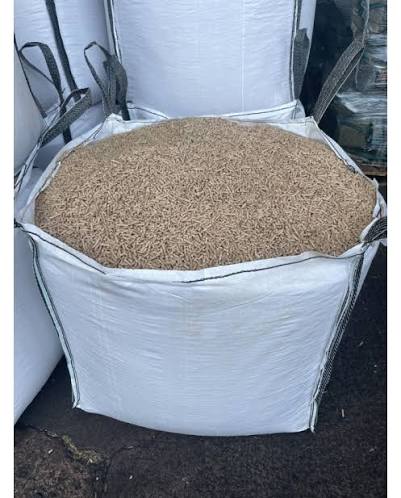
Packaging format is chosen to match how the destination market actually buys. Fifteen-kilogram bags on pallets (66 bags per pallet) suit retail and small-installer distribution but carry the highest per-tonne packaging cost. One-tonne big bags reduce packaging cost and suit mid-size commercial boiler customers with forklift handling. Bulk tanker or vessel delivery offers the lowest landed cost per tonne but requires silo or bulk storage infrastructure at the receiving end — a real consideration when comparing suppliers on delivered cost rather than headline ex-works price.
Quality Assurance: What “Documented Consistency” Actually Means
Every production batch should be tested for moisture, ash content and fines before packing, with records kept by batch so that any delivery can be traced back to its exact production run if a quality question ever arises. For buyers placing their first order with a new supplier, requesting a specification sheet and a sample bag or two — tested against your own equipment before committing to a full truckload — is standard practice and a fair thing to ask of any wholesale pellet exporter.
How Wholesale Pellet Pricing Works
Delivered pricing reflects four main components: feedstock and production cost, packaging format, freight distance, and seasonal demand. Bulk tanker or vessel delivery generally offers the lowest per-tonne price; big bags sit in the middle; small retail bags carry the highest packaging cost but suit buyers without bulk handling capability. Because pellet demand is strongly seasonal — peaking ahead of and during the winter heating months — distributors who place standing orders or forward contracts before the autumn restocking rush typically secure more stable pricing and guaranteed truckload or container availability than those buying spot in peak season, when regional European supply tightens across the board.
Placing a Wholesale Order
Most wholesale pellet orders start at one truckload (around 24 tonnes) or one container (around 24–26 tonnes), the volume at which packaging and freight economics become efficient for both sides. New distributors are welcome to request a specification sheet and sample bags before committing to a full-volume order, and larger commercial or district-heating buyers often move to standing seasonal or annual contracts once an initial trial confirms quality and consistency.
Comparing Total Landed Cost, Not Just List Price
Experienced wholesale buyers compare suppliers on total landed cost — ex-works price plus freight, packaging and any customs or documentation cost — rather than headline price per tonne alone. A lower quoted price from a distant supplier can be outweighed by higher freight cost, longer transit risking moisture damage and fines generation, or a packaging format that doesn't suit your existing handling equipment. When you request a quote from us, ask for a delivered price to your specific location rather than an ex-works figure, so you're comparing suppliers on a genuinely equal basis.
Common Mistakes First-Time Wholesale Pellet Buyers Make
The most frequent misstep we see is ordering purely on price without requesting batch documentation or a sample first — a mistake that only becomes visible once a full truckload has already arrived and a customer complains about ash or fines. A second common mistake is underestimating seasonal lead times: placing a first order in October, at the peak of the restocking rush, when both production capacity and haulage availability are tightest across the whole European supply chain, rather than in late summer when suppliers and hauliers still have flexibility. A third is overlooking storage requirements on the receiving end — ordering bulk tanker delivery without confirming silo capacity, or big bags without forklift access, can turn a good price into an expensive logistics problem.
Storage and Handling After Delivery
However well pellets are protected in transit, storage at the receiving end still determines final quality reaching your customer. Bagged pellets should be kept on pallets in a dry, covered space away from ground moisture; big bags need covered, forklift-accessible storage since the bag material itself offers only limited moisture resistance over time; bulk deliveries require a dedicated silo or storage room with pneumatic or auger-fed discharge. Correctly stored pellets keep well for many months without quality loss, which gives distributors the flexibility to build modest safety stock ahead of the winter season rather than ordering purely reactively as demand rises.
Frequently Asked Questions
Frequently Asked Questions
What does ENplus A1 actually guarantee about a wood pellet?
ENplus A1 is the top grade of the European pellet certification scheme, covering measurable limits on moisture (below 10%), ash content (below 0.7%), calorific value (4.8-5.3 kWh/kg), bulk density, fines and mechanical durability — the properties that determine how cleanly and consistently a pellet burns.
Which European countries currently show the strongest wholesale demand growth for ENplus A1 pellets?
France, the United Kingdom, Spain, Italy and Denmark are among the fastest-growing markets we supply, each driven by a different mix of retail pellet-stove demand, commercial biomass boilers, and — in Denmark's case — large-scale district heating.
Is there a minimum order quantity for wholesale wood pellets from Portugal?
Most wholesale orders start at one truckload (approximately 24 tonnes) or one container (approximately 24-26 tonnes). Smaller trial pallets of bagged pellets can sometimes be arranged for new distributors — ask our export team about current availability.
How does packaging format affect wholesale pricing?
Bulk tanker or vessel delivery offers the lowest per-tonne price but requires silo infrastructure; one-tonne big bags sit in the middle and suit forklift-equipped commercial buyers; 15 kg retail bags carry the highest packaging cost but suit distributors without bulk handling capability.
Do wood pellets shipped across Europe require customs documentation?
Within the EU single market — covering markets like France, Spain, Italy and Denmark — no customs duty or declarations apply, only standard VAT treatment. Non-EU destinations such as the United Kingdom require a customs declaration and import VAT, which we prepare as standard export documentation.