See also: wholesale wood pellets for Denmark.
Denmark stands apart from most of the European wholesale pellet markets we supply because so much of its demand runs through large-scale district heating and combined heat-and-power (CHP) infrastructure rather than individual retail stoves. For wholesale buyers serving Danish biomass heating operators, understanding the country's renewable energy policy context, how bulk import volumes actually work, and what drives such consistently strong demand is essential background before requesting a quote. This guide covers all three.
Renewable Energy Policy and Why Danish Biomass Demand Stays Strong
Denmark operates one of Europe's most aggressive carbon-pricing regimes, which has consistently kept biomass heating cost-competitive against fossil-fuel alternatives at both the household and utility scale. This policy backdrop, combined with a long-standing national commitment to renewable and district heating infrastructure, has made wood pellets and other biomass fuel a mainstream, policy-supported energy source rather than a niche alternative — a meaningfully different demand driver from markets like France or Italy, where growth is led more by individual household heating upgrades.
Biomass District Heating: Denmark's Defining Demand Driver
Denmark operates some of the most extensive district heating networks in Europe, delivering centrally generated heat to a large share of Danish homes and businesses through insulated pipe networks rather than individual boilers. A significant share of this infrastructure runs partly or wholly on wood pellets and other biomass fuel, alongside CHP plants that generate both electricity and heat from the same biomass input. This is fundamentally different purchasing behaviour from a retail pellet-stove market: district heating and CHP operators buy in bulk vessel or large tanker quantities, typically under long-term supply agreements negotiated well ahead of the heating season, rather than smaller container orders placed reactively.
Outside the district-heating network, Danish households and small commercial buildings in areas not connected to district heating also use pellet stoves and boilers directly, adding a smaller but genuine retail and commercial demand layer alongside the large-scale bulk market.
Import Demand: Why Denmark Sources from Southern European Suppliers
Given the scale of Danish biomass consumption, domestic and Nordic regional production alone doesn't always meet demand, particularly during periods of peak winter consumption or when regional supply tightens across Northern Europe. Danish buyers — both large district-heating operators diversifying their supplier base and smaller commercial distributors — increasingly look to Southern European suppliers like us to secure additional ENplus A1-equivalent volume, especially where long-term contract pricing benefits from a supplier base that isn't entirely concentrated in one region.
Bulk Shipping Logistics: Porto / Leixões to Danish Ports
Danish orders move by sea freight from Porto / Leixões, typically via a short-sea or feeder connection into Esbjerg or Fredericia, or via a Hamburg transhipment for buyers closer to the German border. Given the scale of Danish district-heating and CHP demand, we can arrange bulk vessel quantities for buyers placing standing seasonal or annual supply contracts — a meaningfully larger unit of order than the container or truckload volumes that suit most of our other European markets — alongside smaller container volumes for commercial and retail distributors serving the non-district-heating segment of the market.
Because Danish district-heating and CHP buyers typically plan on long-term contracts rather than spot purchases, the practical lead-time consideration isn't so much "how fast can you ship a single order" as "how far ahead do we need to agree annual or seasonal volume." We recommend engaging with our export team well ahead of a contract renewal or new-plant supply decision, since production and shipping capacity for bulk vessel quantities benefits from advance planning on both sides.
Trade Terms Between Portugal and Denmark
As fellow EU member states, Portugal and Denmark trade under single-market rules — shipments move without customs duty or import declarations, with only standard VAT treatment applying. This keeps long-term contract cost planning straightforward for Danish buyers, without the additional customs administration a non-EU import would add to a multi-year supply agreement.
Quality Assurance for Regulated Danish Heating Operators
District-heating and CHP operators typically require more rigorous documentation than a retail distributor, both for their own operational quality control and, in many cases, for regulatory or subsidy-scheme reporting. We supply certificates of analysis for each production batch and can confirm current ENplus-equivalent documentation status against your specific plant's requirement — this is worth clarifying in detail before your first shipment, given how document-dependent utility-scale biomass procurement typically is in Denmark.
Technical Specification for the Danish Market
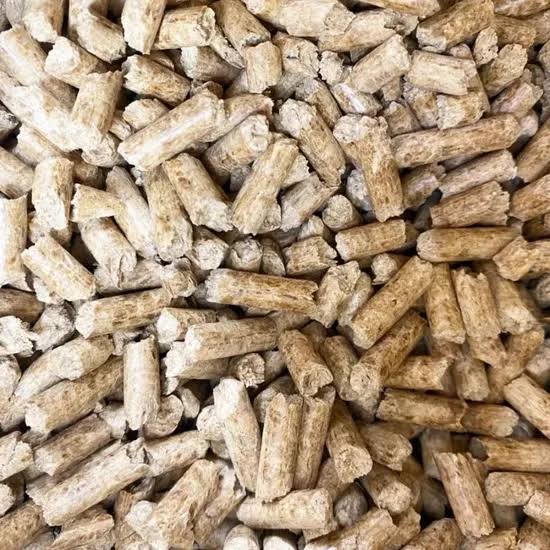
Every batch supplied to Danish customers is produced to ENplus A1-equivalent specification: 6 mm diameter, moisture content below 10%, ash content below 0.7%, calorific value 4.8–5.3 kWh per kilogram, and bulk density of approximately 650 kg per cubic metre — consistent whether the order is a single container for a commercial distributor or a bulk vessel quantity for a district-heating operator.
Starting a Wholesale or Bulk Supply Relationship with Danish Buyers
For commercial and retail distributors, we recommend the same starting point as our other markets: a specification sheet and sample bags before a first container order. For district-heating and CHP-scale buyers, we recommend an initial conversation about your annual volume requirements, documentation needs and preferred contract structure, so we can plan production and bulk shipping capacity well ahead of your required delivery window.
Comparing Bulk Vessel and Container Supply Contracts
Danish buyers at different scales genuinely need different contract structures, and it's worth being explicit about which one fits your operation. A bulk vessel or large tanker contract suits district-heating and CHP-scale operators with the receiving infrastructure to handle a full vessel or large tanker delivery, typically negotiated annually or seasonally with volume and pricing agreed well in advance. A container contract suits commercial and retail distributors at smaller scale, offering more flexibility on order timing and volume but a higher per-tonne freight cost than bulk vessel shipping. We're glad to talk through which structure fits your actual receiving capacity and consumption pattern rather than defaulting to whichever is administratively simplest for us.
Storage and Handling at District Heating and Commercial Facilities
District-heating and CHP facilities typically have purpose-built bulk storage and automated handling systems, so the main quality consideration at that scale is ensuring pellets arrive with minimal fines and consistent moisture so automated feed systems run without interruption. Smaller commercial and retail distributors should follow standard practice: bagged pellets on pallets in dry, covered storage; big bags kept off bare ground with forklift access preserved. Given the longer sea transit from Portugal to Denmark, we pay particular attention to moisture-protected packaging on this route to ensure pellets arrive in the same condition they left our facility.
Working With Our Export Team on Long-Term Contracts
Because Danish bulk and district-heating contracts typically involve significant volume commitments on both sides, we treat these as genuine partnership conversations rather than one-off quotes — discussing your annual consumption pattern, preferred delivery cadence, and documentation requirements in detail before finalising contract terms. This upfront planning is what allows us to guarantee bulk vessel capacity reliably rather than risking availability gaps during peak European demand periods.
Seasonal and Annual Planning for Danish Buyers
Given the scale and lead time involved in bulk vessel logistics, we recommend Danish district-heating and CHP buyers begin annual contract discussions several months ahead of the delivery window they're planning for — ideally by early summer for autumn or winter delivery. Smaller commercial and retail distributors have more flexibility but still benefit from the same forward-planning principle that applies across our whole European export network: ordering ahead of the autumn restocking rush secures better pricing and more reliable availability than reactive spot purchasing once regional supply has tightened.
Frequently Asked Questions
Frequently Asked Questions
Why is Danish wood pellet demand structured so differently from other European markets?
Denmark's demand is dominated by large-scale district heating and CHP infrastructure, which buys in bulk vessel or large tanker quantities under long-term contracts, rather than the smaller retail and installer volumes that dominate most other markets.
Can you supply the volumes needed for Danish district heating or CHP plants?
Yes, we can arrange bulk vessel and large tanker quantities for district-heating and CHP-scale buyers, typically under standing seasonal or annual supply agreements rather than one-off spot orders.
How are pellets shipped from Portugal to Denmark?
By sea freight from Porto / Leixões, typically via a short-sea or feeder connection into Esbjerg or Fredericia, or transhipped via Hamburg depending on your location.
Is customs duty payable between Portugal and Denmark?
No. Both are EU member states, so wood pellets move under single-market rules with no customs duty or import declarations — only standard VAT treatment applies.
What documentation do you provide for regulated Danish biomass heating operators?
We supply certificates of analysis for each production batch and can confirm current ENplus-equivalent documentation status against your specific plant's requirements — worth clarifying in detail before your first shipment.